
Cooling jackets are essential tools for controlling the temperature of wine storage vessels and tanks. These accessories help maintain the optimal temperature, which is essential for preserving the quality of wines. They are excellent for both home wineries and larger wineries that require precise temperature control.
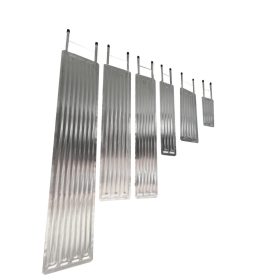
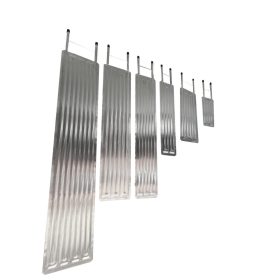

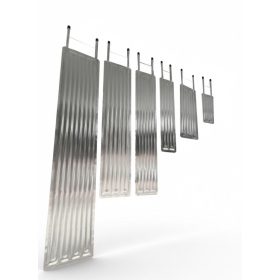

Cooling jackets are available in various sizes and materials to suit the needs of different types of tanks and storage vessels. They are most often made of stainless steel, which not only ensures durability but also excellent thermal conductivity. This allows for rapid and even temperature distribution across the entire surface of the tank, ensuring the ideal environment for the wine.
Maintaining the correct temperature is essential in the wine aging process, as temperatures that are too high or too low can have a detrimental effect on the aroma and flavor of the wine. Cooling jackets allow winemakers to precisely set the desired temperature, ensuring optimal wine development.
Different types of cooling jackets are available, including fixed-installation and portable versions. Fixed-installation cooling jackets are often used by larger wineries, while smaller, mobile versions can be ideal for making smaller quantities of wine or for special events.
Cooling jackets are not only useful for wine, but can also be used for making other beverages, such as beer or cider. Thanks to their universal design, they can be easily integrated into any existing system, thus increasing the efficiency of the winery.
Energy efficiency is also an important consideration when choosing cooling jackets. Newer models often use advanced technologies that reduce energy consumption, thus making the cooling process more economical. This not only saves money in the long run, but also offers an environmentally friendly solution.
Overall, cooling jackets play a prominent role in preserving the quality of wines and are essential tools for any winery that wants to produce the best quality beverages. When choosing, it is worth considering the size of the tank, the quality of the material and energy saving aspects to find the most suitable solution.
